

Why trust is the foundation of service website success
Trust is the invisible contract between your business and a potential customer who has never met you. When someone lands on your service website, they’re asking a simple question: should I pick you? Understanding how to build trust on service websites is what separates enquiries from silence.
That question isn’t answered by a polished logo or clever tagline. It’s answered by signals. Does this business look professional? Can I find their phone number easily? Do real customers recommend them? Have they been around long enough to know what they’re doing?
At We Get Digital, we’ve observed many service businesses struggle with this. They provide excellent work. Their customers love them. But their websites don’t communicate that trust, so enquiries dry up. The website becomes invisible not because it ranks poorly, but because visitors don’t believe it’s worth calling.
Learning how to build trust on service websites isn’t complicated. It’s systematic. You layer signals that tell Google, AI platforms and real people: this business is legitimate, professional and worth choosing.
Website trust signals that convince potential customers
Trust signals are the evidence that your business is real, reliable and worth contacting. They work because they’re hard to fake. A scammer with a website can write anything. A real business can prove it.
The most effective signals combine three things: credentials that show you know what you’re doing, security that protects customer data, and transparency that makes you easy to contact.
Credentials and qualifications
Show what qualifies you to do this work. This might be industry certifications, professional memberships, years of experience, or specific training.
Don’t assume visitors know what these mean. Explain them clearly. If you’re a qualified electrician, say so. Link to the relevant certification body. If you’ve been trading for 15 years, mention it. If you’re a member of a professional body, display the badge.
The key is specificity. “Experienced professional” means nothing. “Qualified Gas Safe engineer since 2014” means everything.
Security and data protection
When someone contacts you through your website, they’re trusting you with their information. Show them you take that seriously.
Use HTTPS across your website and keep its security certificate valid. Encryption protects data in transit; it does not by itself prove a business is trustworthy. If customers enter payment information, use established payment processors. Never ask for sensitive data via unencrypted contact forms.
Privacy matters too. Have a clear privacy policy that explains what you do with customer information. Follow the requirements of the UK Information Commissioner’s Office data protection guidance. This isn’t just legal, it’s a trust signal that you respect customer privacy.
Clear contact information and response times
Make it dead simple to get in touch. Phone number, email address, contact form, provide at least two options.
Here’s what most service websites miss: tell people when they’ll hear back. “We respond to all enquiries within 24 hours” or “Call us Monday to Friday, 9am-5pm” sets expectations. Meeting expectations builds trust faster than anything else.
If you use a contact form, respond quickly. Even a brief acknowledgement (“Thanks for your message, we’ll call you tomorrow morning”) shows you’re real and organised.
Customer testimonials on websites: how to use them effectively
Testimonials are social proof. They’re other customers saying: we used this business and we’re glad we did.
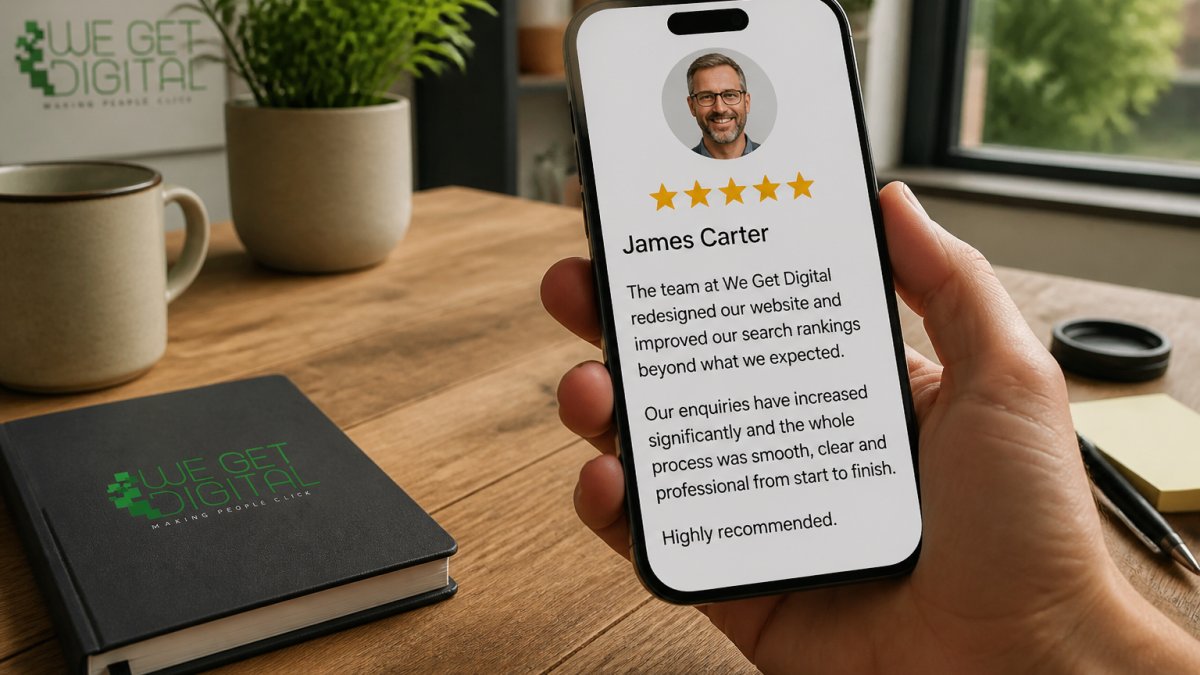
But not all testimonials work equally. A vague quote from “John” with no photo carries far less weight than a detailed review from a named customer with a photo and a clear outcome.
Where to place testimonials for maximum impact
Put testimonials where they answer the visitor’s doubt. If someone’s worried about quality, put a testimonial about quality near your service description. If they’re worried about responsiveness, put a testimonial about how quickly you replied.
Consider a small selection of relevant testimonials on your homepage and service pages. The contact page needs a strong one. This tells visitors: real people have already chosen us and been happy.
Rotate testimonials regularly. Fresh reviews signal that you’re still getting new customers and doing good work.
What makes a testimonial believable
Specific beats vague. “Great service” is forgettable. “They fixed our boiler in two hours and explained everything clearly” is memorable.
With permission, include the customer’s name and, if appropriate, a photo. Include what they were worried about and how you solved it. Include a specific result or outcome.
Avoid generic praise. Avoid testimonials that sound like you wrote them. Real testimonials have personality. They mention real details: the problem, how you solved it, what happened next.
How to write service pages that build confidence
Service pages are where trust gets tested. You describe what you do. The visitor decides if you’re the right choice.
Structure that guides the reader
Start with what you solve, not what you do. “We help small businesses attract more customers through their websites” beats “We offer SEO services.”
Then answer the questions visitors actually ask:
- What’s included?
- How long does it take?
- What’s the process?
- What will change?
Use short paragraphs. Use headings. Break up text with lists. Make it scannable.
End with social proof: a testimonial, a stat about results, or a clear call to action.
Language that reassures without overselling
Avoid hype. Avoid promises you can’t keep. Avoid jargon that confuses people.
Instead, be specific and honest. “We’ll improve your website so more customers find you through Google and understand what you offer” is better than “We’ll transform your digital presence and improve your visibility.”
Explain why what you do matters. Don’t just list features, explain benefits. For example, explain what happens after someone submits an enquiry and how you will use their details. Clear information reassures visitors more than an unexplained badge.
Website about page best practices for service businesses
Your about page is where people decide if they like and trust you as a person or business.
Start with why you started. What problem were you solving? What frustrated you about existing options? Real stories build connection.
Then show you’re qualified. Experience, training, certifications, mention them. But make it about what you can do for the customer, not just your credentials.
Include a photo of yourself or your team. Real faces build trust. Avoid generic stock photos.
Mention how long you’ve been trading. Mention your values. Mention what makes you different. Keep it honest. Keep it human.
End by inviting people to get in touch. Make it clear they can contact you without obligation.
Keeping your website current and trustworthy
Trust erodes over time if your website doesn’t change. An outdated website signals that your business might be outdated too.
Update your testimonials regularly. Add new ones as customers leave them. Keep older testimonials when they remain accurate and relevant; add recent examples alongside them.
Keep your contact information current. If you move premises or change phone numbers, update it immediately.
Refresh your service descriptions occasionally. If your process has improved or your offering has changed, say so. If you’ve added new services, add them.
Check your links. Broken links damage trust. They signal neglect.
Update your team photos every few years. If your team has changed, update the about page.
This isn’t about constant overhauls. It’s about steady maintenance. A website that’s clearly looked after builds more trust than a perfect website that hasn’t been touched in three years.
Building trust on your service website is foundational work. It’s not flashy. It doesn’t deliver results overnight. But it’s the difference between a website that attracts enquiries and one that sits empty.
If your website isn’t generating the enquiries you need, trust might be the missing piece. We Get Digital helps service businesses build websites that are easy to find, clear to understand, and genuinely trustworthy. We combine SEO Strategy and Ongoing Visibility Support with Website Design and Development that communicates confidence and helps potential customers understand what you offer. If you’d like to explore how we can help your business attract the right customers, get in touch to discuss your visibility needs.
Frequently Asked Questions
What are the most important trust signals for a service website?
The strongest trust signals are: clear credentials and qualifications relevant to your service, specific customer testimonials with names and photos, transparent pricing or a straightforward enquiry process, an authentic about page that explains who you are and why you do what you do, and fast, professional response to enquiries. Together, these tell potential customers you’re established, experienced and genuinely interested in helping them.
How can customer testimonials on websites help build trust?
Testimonials from real customers are far more persuasive than any claim you can make about yourself. They show that others have used your service and been satisfied. The most effective testimonials include the customer’s name, their specific problem, what you did, and the result. A photo or company name adds credibility. Place testimonials on service pages and your homepage so prospects see them early in their decision.
How often should I update my service website to maintain trust?
Update your website whenever your services, pricing, team or qualifications change. Beyond that, add fresh content regularly, whether that’s new service pages, case studies, or answers to common questions. An outdated website (old dates, broken links, photos from years ago) signals neglect and raises doubt. Quarterly reviews help catch these issues before prospects notice them.
What information should an about page include to build credibility?
Your about page should explain who you are, how long you’ve been in business, what qualifications or experience set you apart, and why you do what you do. Include a photo of yourself or your team, faces build connection and trust. Be honest about your story, even if it’s humble. Avoid generic corporate language. Prospects want to know they’re dealing with real people who understand their needs.